Ai
AI Tools for Excel: 12 Tools That Save You Hours (2026)
These 12 AI tools for Excel write formulas, clean data, build charts, and answer questions about your spreadsheet — including free options.

 By Taylor Orlando
·November 26, 2026

AI tools for small business are no longer a luxury. A one-person shop can now draft emails, take meeting notes, design social posts, and answer customer questions with tools that cost little or nothing to start. The hard part is not finding tools. It is picking the right ones and skipping the rest.
This guide lists 12 AI tools that actually help a small business, grouped by the job they do. Every tool has a free plan or a free trial, and every price below was checked in November 2026. Prices change, so treat them as a guide and check the vendor’s pricing page before you pay.
| Tool | Best for | Free plan | Paid from |
|---|---|---|---|
| ChatGPT | Writing, ideas, everyday tasks | Yes | $8/mo (Go) / $20/mo (Plus) |
| Claude | Long documents and careful writing | Yes | $20/mo ($17/mo yearly) |
| Gemini | Google Workspace users | Yes | $4.99/mo (AI Plus) |
| Perplexity | Research with sources | Yes | $20/mo (Pro) |
| Grammarly | Fixing grammar and tone | Yes, 100 AI prompts/mo | $12/mo (Pro) |
| Canva | Design and social posts | Yes | $15/mo or $120/yr (Pro) |
| Notion AI | Notes, docs, and wikis | Trial | $10/seat/mo (Plus) |
| Otter.ai | Meeting notes and transcripts | Yes, 300 min/mo | $8.33/mo yearly (Pro) |
| Fireflies.ai | Meeting notes and CRM updates | Yes | $10/user/mo yearly (Pro) |
| HubSpot | CRM, sales, and marketing | Yes (free CRM) | $20/seat/mo (Starter) |
| Zapier | Connecting apps and automating tasks | Yes, 100 tasks/mo | $19.99/mo yearly (Pro) |
| QuickBooks | Invoicing and bookkeeping | No | About $35/mo (Simple Start) |
If you only buy one tool, start with ChatGPT, Claude, or Gemini. Pick the one that fits how you already work, use it every day for a month, and only then add a second tool.
ChatGPT is the all-rounder. Use it to draft emails, write product descriptions, brainstorm names, summarize long documents, and answer quick questions. It also makes images, talks out loud, and can search the web. The free plan covers light daily use. Plus at $20 a month gives you higher limits, the newest models, and more image and research use. A cheaper Go plan at $8 a month covers the basics. Check the current prices on OpenAI’s pricing page.
Claude is the best pick when you write long things: proposals, guides, contracts, or reports. It handles long documents well and its writing reads more natural than most AI tools. The free plan is generous for light use. Pro costs $20 a month, or $17 a month if you pay for the year ($200 up front). See the current plans on Claude’s pricing page.
Grammarly checks spelling and grammar and rewrites sentences to sound clearer or more polite. It works inside email, Google Docs, and your browser, so it catches mistakes where you actually write. The free plan includes 100 AI prompts a month, which is enough for short daily emails. Pro costs $12 a month and adds full rewriting, tone help, and plagiarism checks. It is a small price for a business that sends a lot of written messages.

Perplexity is a research tool, not a chatbot. Ask it a question and it answers with links to its sources, so you can check the facts before you use them. That makes it useful for market research, checking a competitor, or learning about a new topic before you write about it. The free plan covers basic searches. Pro at $20 a month adds more searches, file uploads, and better models. If you use AI to research before you decide, Perplexity earns its place.
Gemini is Google’s AI, and it works best if your business already lives in Gmail, Google Docs, and Drive. It can draft replies in Gmail, summarize long Docs, and help with Sheets. The free plan works with a Google account. Google AI Plus at $4.99 a month adds Gemini inside Gmail and more storage. Google AI Pro at $19.99 a month adds the strongest model, Gemini inside Docs, and 5 TB of storage. See Google’s AI plans page for the current prices.
Canva turns a non-designer into someone who can make decent social posts, flyers, menus, and simple logos. Its AI tools write short captions, remove backgrounds, and resize one design for every social network. The free plan covers most small business needs. Pro costs $15 a month, or $120 a year, and adds background removal, brand colors and fonts, and a much bigger template and photo library. For most small businesses, Canva Pro is the best $10 to $15 a month you can spend on marketing.
Notion is a workspace for notes, checklists, and simple wikis. Its AI can turn rough meeting notes into a clean summary, draft a page from a few bullet points, and find answers inside your own notes. The Plus plan costs $10 a seat a month and includes a Notion AI trial, while the Business plan at $20 a seat a month includes AI properly. It suits a business that wants one place for its notes, SOPs, and plans instead of files scattered everywhere.
Otter.ai joins your Zoom, Google Meet, or Teams calls and writes a transcript, a summary, and a list of action items. You stop taking notes and stop forgetting what was agreed. The free Basic plan gives you 300 transcription minutes a month, but each meeting is capped at 30 minutes, so a one-hour call will not fit. Pro costs $16.99 a month, or $8.33 a month if you pay yearly, and raises the limit to 1,200 minutes with 90-minute meetings. If you take more than five hours of calls a month, the free plan will run out fast.
Fireflies.ai does a similar job to Otter: it records calls, writes notes, and can push summaries into your CRM. Its free plan covers light use. Pro starts at $10 a user a month on yearly billing and adds unlimited storage and more integrations. Pick Fireflies if your team lives in a CRM and wants call notes to land there without copy-paste. Pick Otter if you want the simplest free plan.
HubSpot is a CRM with AI built in. The free CRM tracks contacts, deals, and emails, which is enough for a business getting its first customers in order. Its AI, called Breeze, drafts emails, summarizes calls, and scores leads. Paid plans start with Starter at $20 a seat a month. The honest advice: use the free CRM until you have enough leads that tracking them in a spreadsheet hurts. Then pay. Buying a CRM before you have customers to track is a waste of money.
Zapier connects your apps so work moves by itself: a new form entry becomes a CRM contact, a booked call creates a task, a paid invoice sends a thank-you email. It connects more than 9,000 apps, and you build the flows without code. The free plan allows 100 tasks a month and simple two-step flows, which is enough to test one or two automations. Professional starts at $19.99 a month on yearly billing ($29.99 month to month) for 750 tasks. Start with one automation that saves you 30 minutes a week. That is worth more than ten automations you never finish.
QuickBooks handles invoicing, expenses, and basic bookkeeping, and its AI features now sort expenses, draft invoices, and flag odd transactions. There is no free plan, and Simple Start starts at about $35 a month, so check the current price before you buy. It is worth it when invoicing and chasing payments takes real time each week. If you only send a few invoices a month, a free invoicing tool or a spreadsheet still does the job.
Most small businesses fail with AI the same way: they sign up for five tools at once, use none of them properly, and pay for all five. Ask these five questions before you pay for anything.
The $0 stack: ChatGPT (free) for writing, Gemini (free) for Google Docs and Gmail, Canva (free) for design, Otter.ai (free, 300 minutes) for meeting notes, and Zapier (free, 100 tasks) for one or two automations. This covers most of what a new business needs, and it costs nothing.
The $40 to $60 a month stack: add ChatGPT Plus or Claude Pro ($20), Canva Pro ($10 a month on the yearly plan), and Otter.ai Pro ($8.33 a month on the yearly plan). That is about $38 to $48 a month, and it covers writing, design, and meetings properly. Add Zapier Professional ($19.99) only when your automations hit the free limit.

AI tools read your business data, so check these points before you put customer information into any of them.
There is no single best tool. ChatGPT or Claude is the best starting point for writing and everyday tasks, Canva for design, Otter.ai for meeting notes, Zapier for automation, and HubSpot for sales. Pick the tool that matches the job you do most.
ChatGPT, Google Gemini, Claude, Canva, and Notion AI are the most widely used AI tools for small businesses. Perplexity and Midjourney also appear often, but the five above cover writing, research, design, and notes for most businesses.
You can start for free: ChatGPT, Claude, Gemini, Perplexity, Canva, Otter.ai, and Zapier all have free plans. Paid plans for the main tools cost $8 to $20 a month each. A sensible paid stack for a small business runs about $40 to $60 a month in total.
Claude is better for long documents, careful writing, and code. ChatGPT is better as an all-rounder, with image generation, voice, and more integrations. If you write a lot, pick Claude. If you want one tool that does everything, pick ChatGPT.
ChatGPT is still the most popular and the most versatile, but it is no longer clearly ahead on every task. Claude leads on long writing, Gemini leads inside Google’s apps, and Perplexity leads on research with sources. The best choice depends on what you do all day, not on which tool tops a ranking.
Last updated: November 2026. Prices were checked on vendor pricing pages in November 2026 and can change; check the current price before you buy.

Taylor Orlando is a content writer at Meregate covering websites, SEO, and AI. Taylor breaks down complex topics into simple, practical guides that help small businesses build better websites, rank higher on Google, and get real value from AI tools — no jargon, no fluff.
These 12 AI tools for Excel write formulas, clean data, build charts, and answer questions about your spreadsheet — including free options.

AI tools for stock trading can scan the market, read charts, and test ideas — but they can't predict prices. Here are 12 tools worth knowing, plus the risks to watch.
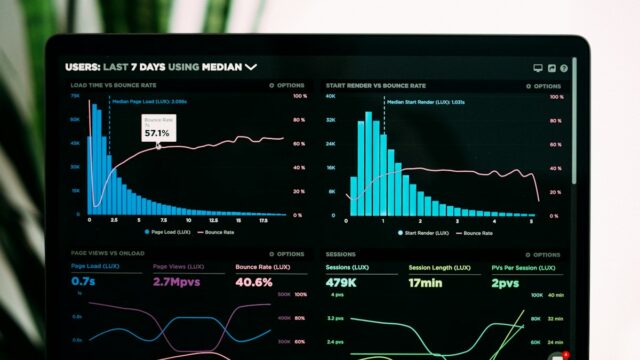
Learn how to use AI for business analysis in six simple steps — from cleaning your data to turning findings into decisions. No coding skills needed.