
SEO
Ahrefs vs Moz: Which SEO Tool Is Better in 2026?
Ahrefs has deeper backlink data. Moz costs less and is easier to learn. Here is the full comparison, with 2026 prices, so you can pick the right one.

 By Taylor Orlando
·November 14, 2026
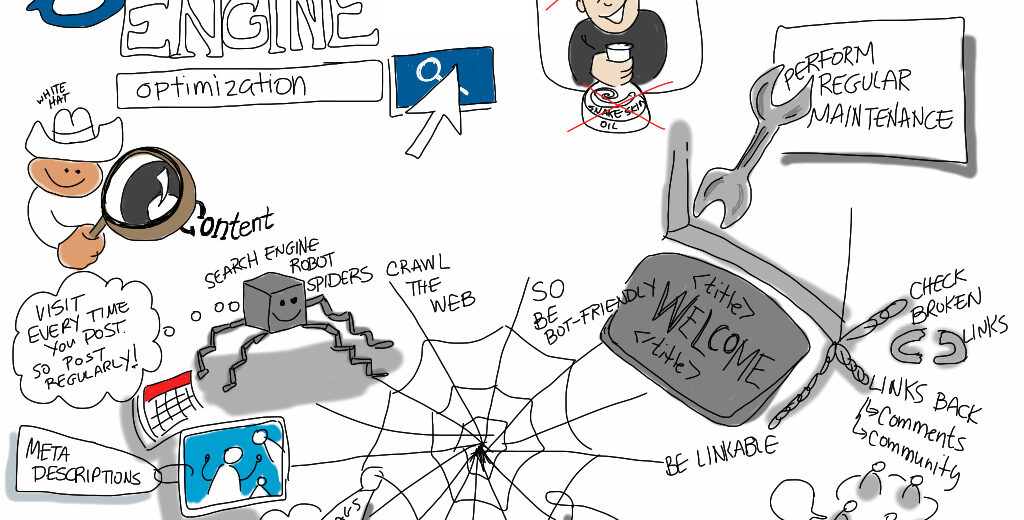
SEO stands for search engine optimization. In plain English, it means making changes to your website so it shows up higher in Google’s free results when people search for what you sell. If you run a bakery in Austin and someone searches “best bakery near me,” good SEO is what puts your website on the first page instead of page five, where almost nobody looks.
This guide explains SEO the way you would explain it to a friend: no jargon, no hype, and no sales pitch. You will learn how Google picks results, the three types of SEO, what it costs, how long it takes, and the exact steps to take in your first 30 days.
Last updated: November 2026
Think of Google as the world’s biggest phone book, mixed with a librarian. When someone types a question, Google looks through billions of pages and picks the ones it thinks will help that person most. SEO is the work of making your pages easy for Google to find, easy to understand, and worth recommending.
A simpler way to picture it: imagine your business is a shop on a busy street. SEO is the sign above your door, the window display, and the good reviews that make people walk in. Without it, your shop is down a side street with no sign at all. The shop is still good — people just can’t find it.
A few words you will keep seeing, explained in one line each:
Google’s job is to answer the searcher’s question as well as it can. To do that, it follows three steps. You do not need to master them — but knowing them makes every SEO tip you read later make sense.
1. Crawling. Google sends out programs called crawlers that visit pages across the web and read them. If a page blocks crawlers, or if no other page links to it, Google may never find it at all.
2. Indexing. After reading a page, Google stores it in a giant index — like a library catalog. Only pages in the index can appear in search results.
3. Ranking. When someone searches, Google pulls matching pages from its index and orders them. It looks at hundreds of signals: does the page answer the question, is it fast and easy to use on a phone, do other trusted sites link to it, and does it match what the searcher probably wants?
Google’s own starter guide puts it simply: focus on making pages that are genuinely useful, and make them easy for Google to find and understand. That is the whole game, and everything in this guide is a version of that advice.
SEO work falls into three buckets. Most small businesses need a bit of all three, but the order matters: fix the basics first, then content, then links.
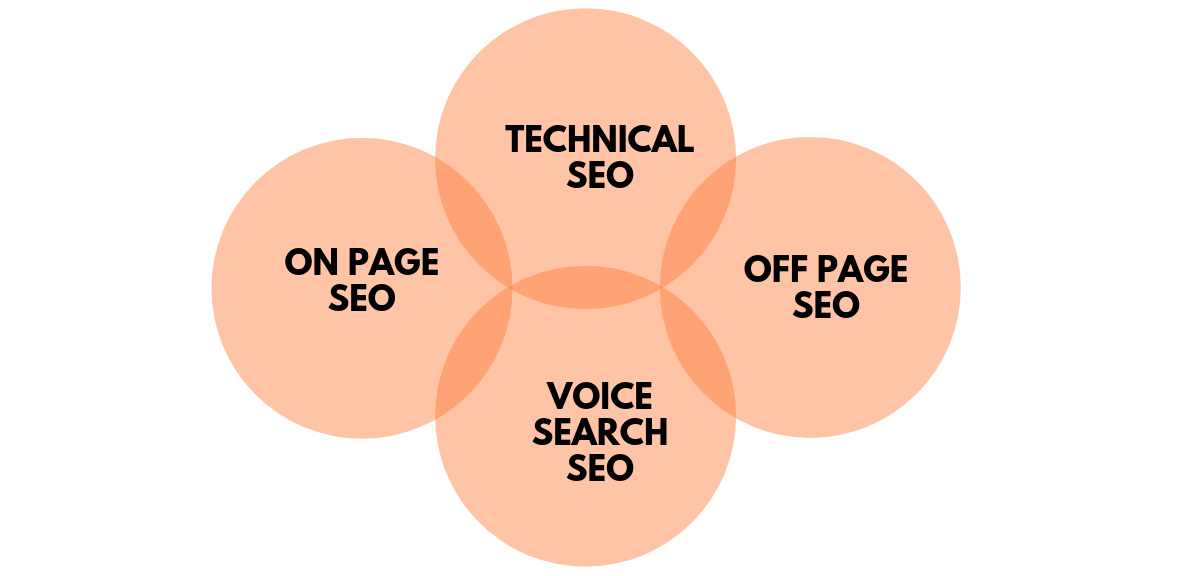
This is everything a visitor can see: the words on the page, the page title, the headings, and the images. Good on-page SEO means each page answers one clear question, uses the words real customers use, and is written for people first — not stuffed with the same keyword twenty times.
Example: a plumber’s page titled “Emergency Plumber in Dallas — 24/7” with clear prices, service areas, and a phone number will beat a page titled “Home” that says “welcome to our website” and nothing else.
This is the behind-the-scenes stuff: does the site load fast, does it work well on a phone, can Google crawl it, and are there broken pages or errors? A slow site that takes eight seconds to load will lose visitors before they ever read a word — and Google notices that too.
You can check the basics for free: PageSpeed Insights tells you how fast your pages load and what to fix first.
This is mostly about links and reputation. When a local newspaper, a supplier, or a happy customer links to your site, Google reads that as a sign your business is real and trusted. For a local business, reviews on your Google Business Profile and mentions in local directories count here too.
One honest link from a real local site is worth far more than a hundred links bought from a shady list. Buying links is against Google’s rules and can get your site pushed down, not up.
People search before they buy. They search for a plumber, a dentist, a caterer, or a shop near them — often on their phone, often ready to spend money. If your business does not show up, those customers go to a competitor who does.
The numbers back this up. BrightEdge’s 2019 channel study found that organic search drove about 53% of trackable website traffic — more than paid search at about 15%. And Google handled more than 5 trillion searches in 2025. Even a tiny slice of that demand is a lot of customers for a small business.
SEO also has one big advantage over ads: it keeps working after you stop paying. An ad stops the moment your budget runs out. A page that ranks well can bring in visitors for months or years from work you did once. That is why small businesses with tight budgets often get more from SEO than from any other kind of marketing — but only if they are patient, because results take time.
Both put you on Google. The difference is how you get there and how long it lasts.
| SEO (organic results) | Google Ads (paid results) | |
|---|---|---|
| Cost | Free clicks; you pay with time or hire help | You pay for every click, often $1–$10+ each |
| Speed | Slow — weeks to months | Fast — live the same day |
| How long it lasts | Months or years after the work is done | Stops the moment you stop paying |
| Trust | Many people skip ads and click organic results | Marked as “Sponsored”; some people ignore them |
| Best for | Long-term, steady leads | Quick sales, a new launch, or a short offer |
Most small businesses do best with both, in this order: run ads when you need customers right now, and build SEO at the same time so that, a few months from now, the free traffic starts carrying more of the load. If you can only afford one, pick SEO when you can wait, and ads when you cannot.
This is the question every business owner asks, and the honest answer is: longer than you want, but not forever. Google’s own guide says some changes show up in hours and others take several months, and it suggests waiting a few weeks before judging a change.
Here is a realistic timeline for a small business website:
| Timeframe | What you can expect |
|---|---|
| First 2–4 weeks | Google finds and indexes your fixes. Little visible change. |
| 1–3 months | First signs: more pages showing up in search, a few rankings climbing, small traffic bumps. |
| 3–6 months | Real movement for local and low-competition keywords. More calls and form fills if the pages are good. |
| 6–12 months | Meaningful, steady traffic — if you kept publishing and improving the site. |
Local businesses usually see results faster than national ones, because “plumber in Austin” has far fewer competitors than “plumber.” A brand-new site takes longer than an established one, because Google trusts sites with history. And if your market is crowded — lawyers, dentists, real estate — expect the longer end of the range.
Anyone who promises you page one in two weeks is selling you something. SEO is slow because Google is careful: it waits to see if your pages are really useful before it trusts them.
SEO itself is free in one sense: Google does not charge you to appear in the organic results. What costs money is the work — your time, or someone else’s.
The biggest public survey of SEO pricing, by Ahrefs in 2024, asked 439 agencies, consultants, and freelancers what they charge. The average monthly retainer was $2,917, but the most common price band was $501 to $1,000 a month, and about 69% of providers charged $2,000 a month or less. Freelancers averaged about $1,349 a month, agencies about $3,209, and local SEO averaged about $1,557 a month.
| Option | Typical cost | Best for |
|---|---|---|
| Do it yourself | $0, plus your time | Small sites, tight budgets, owners willing to learn |
| Freelancer | About $1,349/month on average | A defined job, like fixing technical issues or writing pages |
| Agency | About $3,209/month on average | Ongoing work that needs several skills at once |
| Local SEO package | About $1,557/month on average | Single-location businesses that serve a local area |
| One-off project | $2,500–$5,000 is the most common fee | A site audit, a rebuild, or a set of new pages |
Good tools are mostly free at the start: Google Search Console and Google Analytics cost nothing, and PageSpeed Insights is free too. Paid tools like Semrush (from about $139 a month) and Ahrefs (from about $129 a month) are useful later, but no beginner needs them in month one.
Whatever you spend, ask for a clear list of what will be done each month. “We do SEO” is not a deliverable. “We will fix your site speed, write four service pages, and build your Google Business Profile” is.
Short answer: no. But search is changing, and it helps to know how.
Google now shows AI Overviews — short AI-written answers — at the top of many searches. ChatGPT, Perplexity, and other AI tools answer questions directly too. That means fewer people click through to websites: about 68% of US searches ended without a click in early 2026, according to SparkToro and Similarweb data. So yes, some clicks you used to get will now go to an AI answer instead.
What does not change: Google and the AI tools still need good pages to base their answers on. When an AI Overview answers a question, it cites the pages it used — and those pages are the ones that did SEO well. The work that wins has not changed much:
One more thing: AI tools are happy to write content for you, but pages written only to rank — thin, generic text with no real knowledge behind it — are exactly the pages Google has been pushing down. Use AI to draft or to check your work, then add the details only you know. That is what makes a page worth citing.
A lot of bad advice floats around SEO. Here is what it is not:
If an SEO seller promises fast rankings, secret methods, or thousands of links for $99, walk away. Real SEO is boring, public work: fix the site, write useful pages, earn honest links, and repeat.
You do not need to do everything at once. Here is a simple plan, one week at a time.
You do not need a dashboard full of charts. Check three numbers once a month in Google Search Console:
Then check the number that actually pays the bills: calls, form fills, and bookings from search. Traffic that never turns into customers is just a vanity number.
Yes. The basics — clear titles, useful pages, a full Google Business Profile, and asking for reviews — need no expert. Google publishes its own SEO Starter Guide for free, and it is the best place to learn. Hire help when the work gets technical or when you have no time, not before you have done the basics yourself.
Both. Appearing in Google’s organic results costs nothing per click, but the work takes time or money. Doing it yourself costs time. Hiring help usually costs $500 to $3,000 a month for a small business, with local SEO averaging about $1,557 a month in the Ahrefs 2024 survey.
Yes. Google still handles trillions of searches a year, and AI Overviews and chatbots cite well-optimized pages rather than replacing them. What changed is that answers now appear without a click more often, so pages need to be genuinely useful and clearly written to get cited.
ChatGPT can help: it can draft pages, suggest titles, and explain technical terms. It cannot do SEO for you. It does not know your customers, your prices, or your local market, and pages written entirely by AI with no real experience behind them are exactly the kind Google pushes down.
The basics are not hard — most owners can learn them in a few weeks from Google’s free guide. The hard part is patience and consistency: doing the unglamorous work every month for six months while results build slowly.
You can learn the basics in one to three months of steady reading and practice on your own site. Getting good — technical fixes, content that ranks in competitive markets, earning links — takes longer, usually a year or more of real work.
SEO is not magic and it is not a trick. It is the patient work of making your website the clearest, most helpful answer to what your customers are already searching for. Start with the free tools, fix the basics, write one genuinely useful page, and ask for reviews. Then do it again next month. Six months from now, you will be glad you started today.

Taylor Orlando is a content writer at Meregate covering websites, SEO, and AI. Taylor breaks down complex topics into simple, practical guides that help small businesses build better websites, rank higher on Google, and get real value from AI tools — no jargon, no fluff.
Ahrefs has deeper backlink data. Moz costs less and is easier to learn. Here is the full comparison, with 2026 prices, so you can pick the right one.

Domain and hosting are two different things, and you need both to put a website online. Here is the simple difference, the costs, and how they connect.

An image sitemap tells Google where your images live — including the ones hidden in galleries and JavaScript. Here is when you need one and how to set it up.