
SEO
Semrush vs Ahrefs: Which SEO Tool Is Better in 2026?
Semrush and Ahrefs are the two most popular SEO tools, but they are not the same. This comparison breaks down where each one wins so you can pick the right one for your work.

 By Taylor Orlando
·October 20, 2026
· Updated October 21, 2026

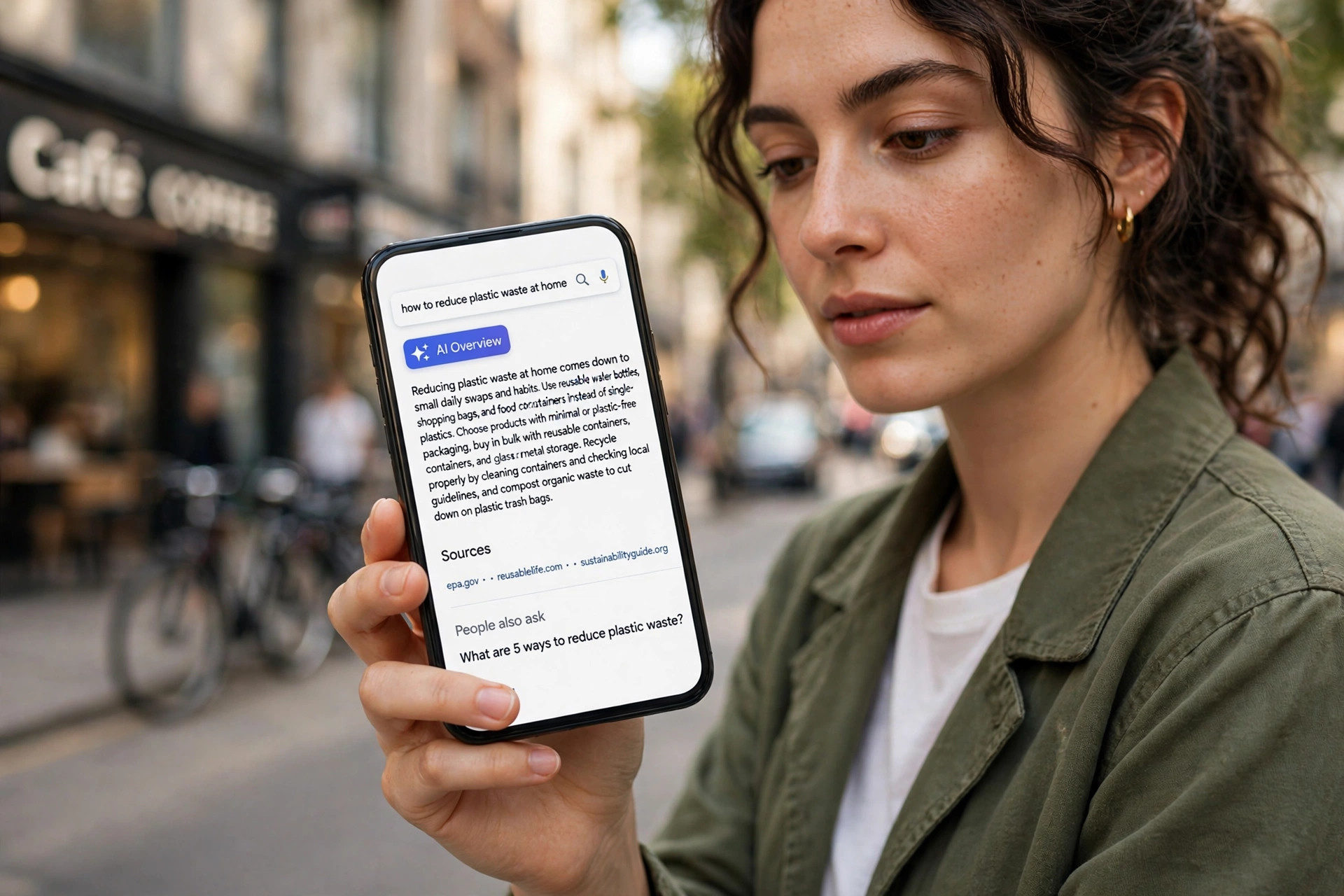
When you Google a question today, the first thing you often see is not a list of blue links. It is a short AI-written answer sitting right at the top of the page. That answer is called a Google AI Overview, and yes — your website can get cited in it. This guide shows you how to rank on Google AI Overview step by step, using what the latest data (and Google itself) actually says.
AI Overviews are no longer a small experiment. According to an Ahrefs study from January 2026, they now show up on 21% of all searches — and on 57.9% of searches phrased as questions. Almost all of them (99.9%) appear on informational queries. In other words: if your site answers questions, this is now part of your SEO.
A Google AI Overview is a short answer that Google’s AI writes at the top of the search results page. It pulls information from a few websites, blends it into one summary, and shows links to the sources it used. Those source links are what you want. When your page is one of them, people see your brand name above every organic result on the page.
Google builds these answers through what is called retrieval-augmented generation (RAG). In plain terms: Google finds trusted passages of text, then uses its AI to turn them into a summary. The key word is “trusted.” Google only cites passages it believes are accurate, clear, and helpful.
Some site owners worry that AI Overviews steal clicks. The truth is more balanced. Google reported in May 2025 that clicks from AI Overviews are higher-quality visits — people who click through tend to stay longer and engage more. So getting cited does not just bring visibility. It can bring your best visitors.
There is also a first-mover angle. Many competitors have not adjusted their content for AI search yet. A recent AIOSEO analysis calls this the “first-mover advantage” of AI search optimization. The sites that adapt now build up citations and authority while others are still guessing.
Before the steps, it helps to know what Google’s AI is looking for. Based on Google’s own guidance and independent studies, the pattern is clear:

Here is the practical part. Every step below comes from real data or official guidance — not guesswork.
AI Overviews exist to answer questions, so your content should too. Look at the “People Also Ask” box for your topic and answer those exact questions in your article. Use the question as a heading, then give a short, direct answer in the first 2–3 sentences under it. That question-heading format is the single most common pattern in cited content.
Many writers spend 300 words “setting the scene” before answering. Do the opposite. State the answer early, then add the detail. Remember the CXL finding: more than half of all cited passages sit in the first 30% of the page. If your answer is buried at the bottom, Google’s AI may never see it — and neither will most readers.
This is the unglamorous truth: AI Overviews mostly cite pages that already rank. If you are not in the top 10 for your query, your odds of being cited drop hard. So keep doing solid SEO — fast pages, good titles, real backlinks — while you add AI-specific tweaks. If you run a WordPress site, start with the basics in our WordPress SEO guide, then layer the steps below on top.
People type full questions into Google now, not two-word keywords. Write in natural, conversational language and match the phrasing real searchers use. Long-tail question queries — eight words or more — are the sweet spot for AI Overviews. A title like “how to rank on Google AI Overview” works better than “AI Overview SEO” because it mirrors how people actually search.
Google’s AI favors content that shows the author actually did the thing. Add your own screenshots, your own test results, specific numbers, and first-hand observations. Generic advice that could have been written by anyone gets skipped in favor of content with proof. This is the E-E-A-T principle (Experience, Expertise, Authoritativeness, Trust) applied to AI search.
AI systems extract information more easily from clean, predictable layouts. Use short paragraphs (2–3 lines), descriptive H2 and H3 headings, bullet lists for steps, and tables for comparisons. Define key terms clearly. A page that is easy to scan for humans is also easy to extract for AI — the two goals are the same.
FAQ sections near the end of your article are one of the most-cited content blocks on the web. They are short, question-based, and direct — exactly what AI Overviews want. Adding FAQ schema markup does not directly force Google to cite you (Ahrefs found its effect is indirect at best), but it helps Google understand your page’s structure. Keep the markup honest: only mark up questions that are actually visible on the page, per Google’s rules.
Here is something most guides skip. The Ahrefs data shows that brands mentioned positively across multiple sites — reviews, forums, news, social — show up in AI Overviews more often. Google’s AI seems to trust brands that the wider web trusts. This is sometimes called “surround-sound SEO”: guest posts, podcast appearances, directory listings, and genuine reviews all add up. One study even found unlinked brand mentions correlate with AI visibility.
YouTube is one of the most-cited domains in AI Overviews. If you can turn your article into a short video — even a simple screen recording — you open a second door to being cited. Embed the video on the page and publish it on YouTube with a clear title. For how-to topics, this is one of the cheapest advantages you can get.
You may have also seen “AI Mode” — Google’s full AI search tab. The difference matters. AI Overviews are short summaries on the regular results page. AI Mode is a separate, deeper conversational search. In AI Mode, Google breaks complex questions into many hidden sub-questions (researchers call this “query fan-out”) and pulls from the top 10–20 organic sources.
The practical takeaway: optimizing for one helps with the other. Clear answers, strong organic rankings, and broad topical coverage win in both places.
Google keeps changing how citations work. In May 2026, Google announced two updates worth knowing:
There is no single dashboard for AI Overview citations yet, but you have options:
1. Hiding your content behind slow or broken pages. If Google’s crawler struggles with your page — heavy scripts, blocked resources, slow load — the AI may never read your content at all. Technical SEO is a prerequisite, not a bonus.
2. Chasing magic files and tricks. Some tools push the idea of adding an “llms.txt” file or special “GEO markup” for AI search. Google’s official guidance is clear: the same content principles apply to AI and classic results. No special file is required. Spend that time writing better answers instead.
3. Publishing thin, rewritten content. Rewriting what ten other sites said — in slightly different words — is the fastest way to be ignored. Google’s AI has no reason to cite the 11th version of the same advice. Add something original: your data, your tests, your examples.
Rank in the organic top 10 for question-based queries, answer the question directly near the top of your page, use clear headings and lists, and show real expertise. Most citations go to pages that already rank well in regular search.
Yes. While big brands get cited often, Google’s AI picks passages based on clarity and relevance, not just domain size. A small site with the best direct answer to a specific question can absolutely be cited.
No. Google has said it judges content by quality, not by how it was produced. Helpful, original content is fine whether a human typed every word or an AI helped draft it. Low-quality spam is the problem — not the tool.
No. AI Overviews summarize the web, and the web contains errors. One benchmark reported by the New York Times put the accuracy of Google’s AI answers at roughly 91% — good, but not perfect. Always verify important facts against the cited sources.
Ranking on Google AI Overview is not a separate game from SEO — it is SEO with the volume turned up. Answer real questions, put the answer first, rank in regular results, and show genuine experience. Do those four things well and you will be ahead of most sites on the internet.
Last updated: October 2026

Taylor Orlando is a content writer at Meregate covering websites, SEO, and AI. Taylor breaks down complex topics into simple, practical guides that help small businesses build better websites, rank higher on Google, and get real value from AI tools — no jargon, no fluff.
Semrush and Ahrefs are the two most popular SEO tools, but they are not the same. This comparison breaks down where each one wins so you can pick the right one for your work.

If your website is not showing on Google, the cause is usually simple: it is not indexed yet, something is blocking Google, or it ranks too low to see. This guide walks through each check in order.

Good image file names help Google understand your images and help people find them. Here are the naming rules, a simple formula, and good vs bad examples for every image type.