
SEO
How Long Does It Take for a Blog Post to Rank on Google? (2026)
Expecting traffic in week one? Most blog posts need 3-6 months to rank well. Here is the honest timeline, the factors that move it, and how to speed it up.

 By Taylor Orlando
·November 3, 2026

If you have ever checked a website in Ahrefs, you have seen a number called Domain Rating, or DR. It sits next to every site you look up, from tiny blogs to huge news sites. But what does that number actually mean, and should you care about it? This guide gives you a plain answer.
Domain Rating is a score from 0 to 100 that shows how strong a website’s backlink profile is, compared with every other site in Ahrefs’ database. A higher score means a stronger backlink profile. It is a tool made by Ahrefs, so you will only see it in Ahrefs products and in tools that license Ahrefs data.
Think of backlinks as votes from other websites. When a site links to yours, it passes some trust to you. Domain Rating adds up all of those votes and turns them into one number. A site with links from many strong, trusted websites gets a high DR. A brand-new site with almost no links sits near zero.
Two points matter here. First, DR only looks at links. It does not look at your traffic, your content quality, or how old your domain is. Ahrefs is open about this: the metric is purely link-based. Second, DR is relative. Your score depends on how your backlink profile compares with other sites, so it can move even when you change nothing, simply because other sites gained or lost links.
If you are new to these scores, it helps to know how domain authority differs. That is Moz’s score, and it tries to predict how likely a site is to rank. Domain Rating asks a narrower question: how strong are this site’s backlinks?
Ahrefs does not publish an exact formula, but it does explain the method in simple steps:
The scale is logarithmic, not straight. That means the jump from DR 20 to DR 30 is much easier than the jump from DR 70 to DR 80. At the top end, each single point takes a huge amount of strong links. This is why small sites can climb fast at first and then slow down.
One more detail: DR counts unique domains, not total links. Getting 100 links from the same website counts as one referring domain. Ten links from ten different websites are worth far more for DR than 100 links from one site.

These three scores are easy to mix up, so here is the short version:
A site can have a high DR while one of its pages has a low UR. That happens when most of the site’s links point to the homepage, not to that page. If you want a specific page to rank, links to that page itself matter more than the site’s overall DR.
There is no magic number. A good DR depends on your niche and your competitors. A local bakery blog with a DR of 30 can outrank a DR 60 site for local searches, because the searches are different and the content is a better match. The score only makes sense next to similar sites.
As a rough guide:
Do not treat these bands as grades. A DR 35 site that serves its readers well beats a DR 70 site with thin content for most real searches. Google does not use DR as a ranking factor. Google has said this clearly, and Ahrefs explains Domain Rating the same way: it is a third-party estimate, not a Google score.
DR is most useful in three places:
1. Checking link prospects. Before you pitch a guest post or ask for a link, check the site’s DR. A link from a real site with a decent DR in your niche is usually worth more than a link from a high-DR site that links to everyone.
2. Comparing competitors. Look at the DR of the sites ranking for your target keyword. If they all sit at DR 70 and you are at DR 15, that keyword will be a long fight. If they sit near your level, you have a real chance.
3. Spotting problems. If your DR drops sharply, check your backlinks. You may have lost a few strong links, or a site that linked to you may have lost its own links.
DR is less useful as a goal by itself. Chasing the number leads people to buy low-quality links, and Ahrefs itself warns that spammy links can raise DR without helping rankings. A high DR built on spam is a trap, not a win.
There is no shortcut that lasts. The honest path is the same work that builds real rankings:
Watch your referring domains, not just the score. If that count grows with real, relevant sites, your DR will follow in time.
Comparing scores across tools. DR, Domain Authority, and Semrush’s Authority Score are not the same number. A DR of 45 and a DA of 45 mean different things. Compare like with like.
Paying for DR. Sellers promise to raise your DR fast. They do it with links from spammy networks. Your score may rise, but your rankings usually do not, and you risk a penalty.
Ignoring relevance. A link from a DR 50 site in your field beats a link from a DR 80 site about something unrelated. Relevance still counts for real rankings, even though DR does not measure it.
No. Google does not use Ahrefs’ Domain Rating. It is a third-party estimate based on links only.
Domain Rating is Ahrefs’ link-only score for a whole domain. Domain Authority is Moz’s score, built from 40+ signals, that tries to predict ranking ability. They measure different things, so the numbers are not interchangeable.
Yes, and it happens all the time. Better content, a closer match to the search, and a stronger page can beat a stronger domain.
Ahrefs recalculates DR as its index of the web updates, so small changes can show up often. Big moves take time and real link changes.
Last updated: November 2026

Taylor Orlando is a content writer at Meregate covering websites, SEO, and AI. Taylor breaks down complex topics into simple, practical guides that help small businesses build better websites, rank higher on Google, and get real value from AI tools — no jargon, no fluff.
Expecting traffic in week one? Most blog posts need 3-6 months to rank well. Here is the honest timeline, the factors that move it, and how to speed it up.

Learn how to optimize images for SEO: file names, alt text, WebP, compression, and responsive sizes — so your pages load faster and rank better.
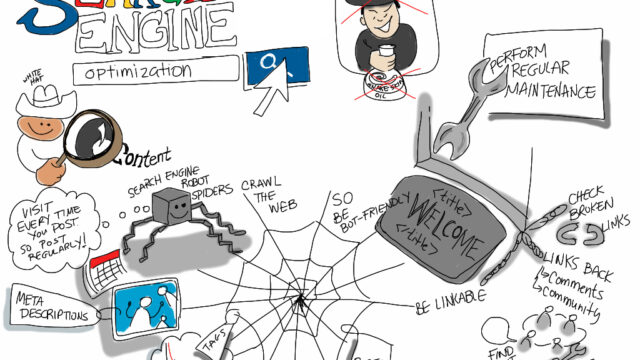
Learn how to improve Google search ranking with 12 practical steps — from fixing indexing and matching search intent to earning links and measuring progress, all with free tools.