How to Create a Digital Marketing Strategy: A Simple Guide (2026)
Learning how to create a digital marketing strategy sounds harder than it is. At its core, a strategy is just a simple plan: who you want to reach, what you want them to do, which online channels you will use, and how you will know if it worked. You do not need a 40-page document or a big budget. You need clear choices, written down, that you can actually follow.
This guide walks you through those choices step by step, with a one-page template and a worked example at the end. It is written for small business owners who do most of their own marketing and want results they can measure.
Last updated: October 2026
What a digital marketing strategy actually is
A digital marketing strategy is your plan for using online channels — your website, search, social media, email, and paid ads — to reach a business goal. It answers four questions:
- Who are we trying to reach?
- What do we want them to do?
- Which channels will we use to reach them?
- How will we measure success?
It is not the same as a marketing plan. The strategy is the direction: the goal, the audience, and the channels. The plan is the detail: what gets posted, when, by whom, and what it costs. You need the strategy first, or the plan becomes a list of random posts and ads that lead nowhere.
One more point before we start: a good strategy says what you will not do. A small business cannot be great on every channel at once. Picking two or three channels and doing them well beats being thin everywhere.
Step 1: Set one clear business goal
Every strategy starts with a goal, and the goal must be a number with a date. “Get more customers” is a wish, not a goal. “Get 20 qualified enquiries a month from our website by the end of January” is a goal, because you can plan backwards from it and you will know whether you hit it.
Pick one main goal for the next 90 days. If your business wants both more leads and more brand awareness, choose which one this quarter is for and put the other one on hold. A plan with four goals spreads your time and money four ways and usually hits none of them.
Useful goals for small businesses include:
- A number of enquiries, bookings, or sales per month
- A number of email subscribers
- A target for website visits from search
- A target for repeat purchases from past customers
Write your goal as one sentence: “By [date], we will get [number] [enquiries/sales/subscribers] from [channel or overall].” Keep it visible. Every later choice in this guide should serve that sentence.
Step 2: Know exactly who you are trying to reach
Most weak marketing comes from talking to “everyone.” A bakery that tries to reach everyone ends up reaching no one in particular. Instead, describe your best customer in plain words:
- Who are they? (For example: homeowners within 15 miles, parents planning kids’ birthday parties, small offices ordering lunch.)
- What problem are they trying to solve?
- What do they search for on Google before they buy?
- Where do they spend time online — Google, Facebook, Instagram, YouTube, TikTok?
- What worries them before they contact a business like yours? (Price, quality, trust, timing?)
You do not need a fancy persona document. A short paragraph about your best customer is enough. Then check it against reality: look at your past customers, your reviews, and the questions people actually ask you. If your description does not match your real customers, fix the description.
Write down the five questions your customers ask most often. Those questions will become your content later, in Step 5.
Step 3: Audit what you already have
Before you build anything new, take stock of what exists. This takes about an hour and saves you from paying for things you already have.
- Website: Is it fast on a phone? Is it clear what you sell and how to contact you? Does it show up for your business name on Google?
- Google Business Profile: Is your listing claimed, with correct hours, services, and photos?
- Social media: Which accounts exist, and which ones actually get replies or enquiries?
- Email list: Do you have past customers’ email addresses, and permission to email them?
- Past results: Where did your last 20 customers come from? Ask them, or check your website stats.
Rank each item as working, needs work, or missing. Fix the broken basics first. There is no point paying for ads that send people to a website with the wrong phone number.
Step 4: Pick your channels — and only two or three to start
Channels are the places you reach customers. Each one does a different job. Use this table to match channels to your goal:
| Your main goal | Best channels to start with |
|---|---|
| More local enquiries | Google Business Profile, local search (SEO), reviews |
| More online sales | Search (SEO), paid search or social ads, email |
| More repeat business | Email, social media, loyalty offers |
| More brand awareness | Social media, helpful content, short video |
Now pick two or three channels you can run well with the time you have. A good starter set for many small businesses is: a solid website and Google Business Profile, one social platform where customers actually are, and email to past customers. Add a channel only when the first ones run smoothly.
For each channel, write one sentence about the job it does. For example: “Instagram shows our finished work and brings people to the booking page.” If you cannot say what a channel is for, you probably do not need it yet.

Step 5: Plan content around customer questions
Content is what you publish: pages on your website, posts, videos, and emails. The simplest content plan is built from the questions you wrote down in Step 2.
For each question, create one helpful answer. A plumber might write: “Why does my drain keep blocking?”, “How much does it cost to fix a leaking tap?”, and “What should I check before calling a plumber?” A bakery might post cake photos, a price guide, and a short video of a cake being decorated. Each piece answers a real question or shows real work.
Keep a simple calendar. One useful post a week beats five rushed posts one week and silence for a month. Plan a month at a time: pick the topics, write them in batches if you can, and leave room for news or seasonal offers.
Reuse everything. One helpful article can become a short video, three social posts, and a paragraph in your next email. That is how small teams publish often without burning out.
Step 6: Set a budget you can afford
A budget is easier to set when you work backwards from what a customer is worth. Here is a simple way to do it:
- Work out what one new customer is worth to you. (For example: an average job of $300, and a typical customer comes back twice, so about $900 over time. Use your own numbers.)
- Decide what you can afford to spend to win that customer. Many small businesses start with 10 to 20 percent of that value. On the example above, that is $90 to $180 per new customer.
- Divide that by how many enquiries you need to get one customer. If one in four enquiries becomes a paying customer, you can afford $22 to $45 per enquiry.
These are planning numbers, not rules. The point is that your budget follows from your own prices and close rate, not from a guess or a competitor’s spend.
Split the budget into three parts: media (ads), tools (software, email platform), and time or labour (your hours or a freelancer’s fee). Time counts. A “free” channel that eats 10 hours a week is not free.
Start small and test. Run a channel for 90 days with a fixed budget, measure it honestly, and only scale what earns its keep. Never sign a long contract for a channel you have not tested.
Step 7: Set up measurement before you launch
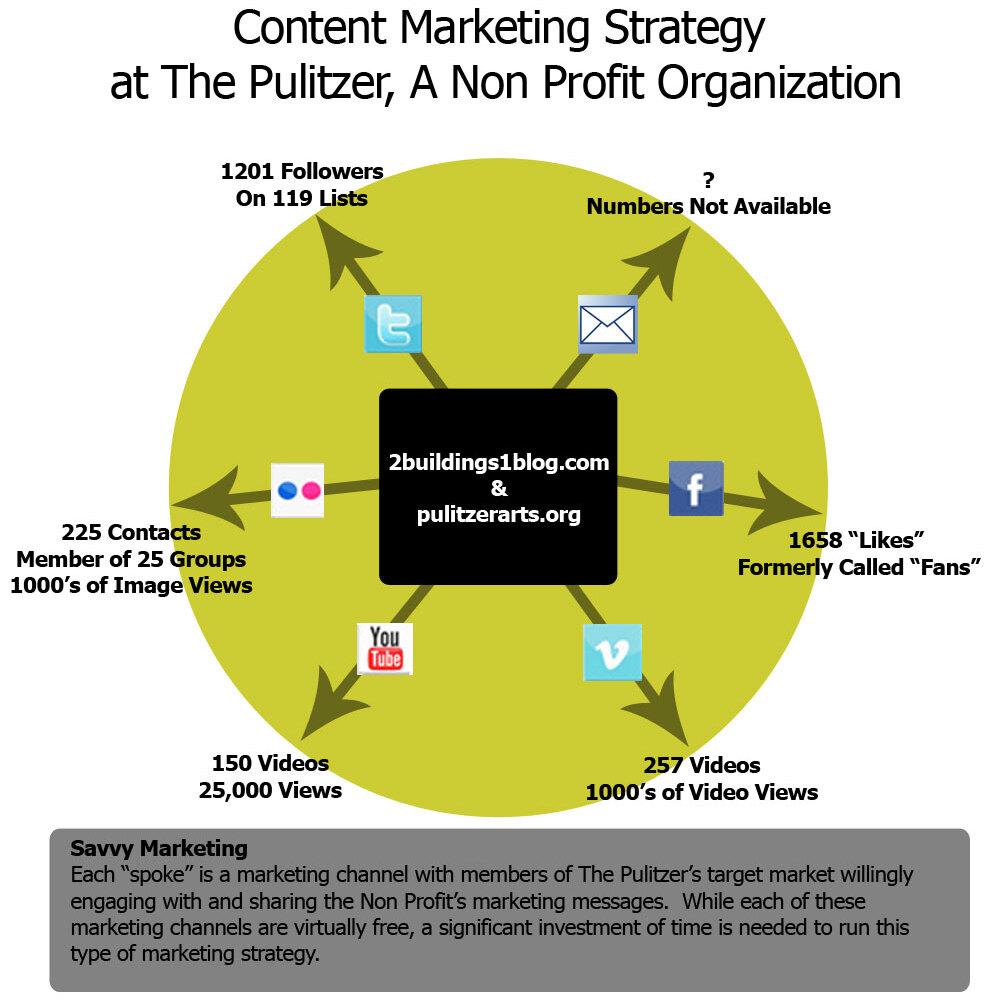
Measurement is where most small business strategies fall apart. Decide now what you will track, so you are not guessing later.
Give each channel one main metric tied to your goal. Website and search: enquiries or sales from organic search. Social media: clicks to your website or booking page, not just likes. Email: bookings or sales from each email. Paid ads: cost per enquiry or per sale.
Set up the free tools first: Google Analytics to see where visitors come from and what they do, and Google Search Console to see which searches bring people to your site. Add simple tracking links to your social posts and emails so you can tell which post or email led to an enquiry.
Write down your starting numbers before you launch: enquiries per month, website visits, email list size. Without a starting point, you cannot tell if anything improved.
Step 8: Launch small, review monthly, and fix what is weak
Launch your first version in weeks, not months. A strategy that takes six months to write is already out of date. Here is a realistic first 90 days:
Days 1–30: Fix the basics
Claim and complete your Google Business Profile, fix the biggest website problems (wrong details, slow pages, unclear contact options), set up analytics, and publish your first four pieces of content. Start one channel well rather than five badly.
Days 31–60: Run and watch
Publish on schedule, reply to every comment and enquiry quickly, and start your first small paid test if it fits your budget. At the end of the month, check your one metric per channel. Keep what works, pause what does not.
Days 61–90: Double down and decide
Put more time or money into the channel that produced the best enquiries per dollar or per hour. Fix the weakest step in your funnel — often it is the landing page or the follow-up, not the ad. Then set the next 90-day goal.
Review channel results every month, the full plan every quarter, and the strategy itself once a year — sooner if your market or your customers change a lot. A strategy that is never reviewed slowly turns into a document nobody trusts.
Your one-page strategy template
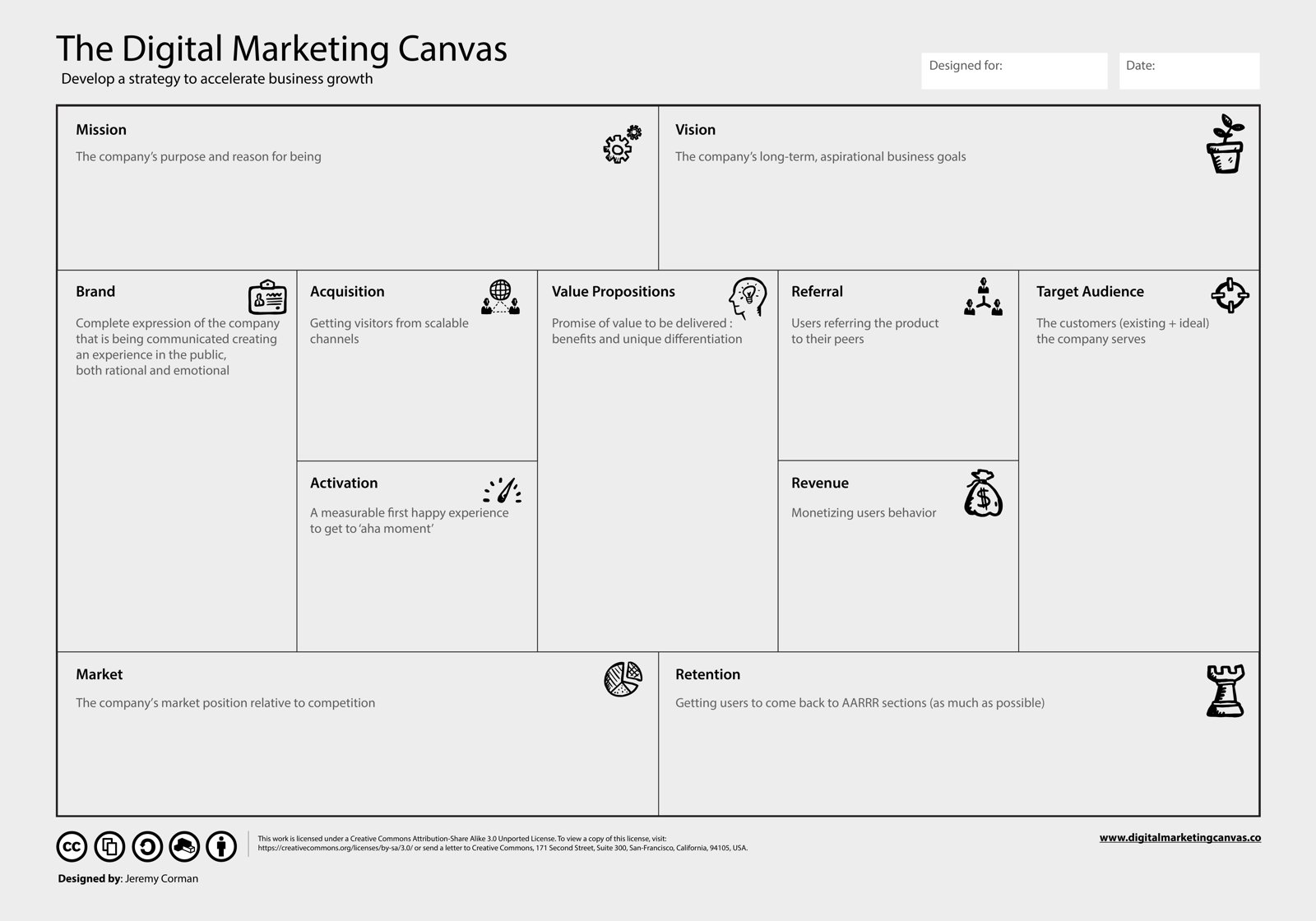
Copy this table into a document and fill in one line per row. If it takes more than one page, you are overcomplicating it.
| Section | Your answer |
|---|---|
| Main goal (number + date) | |
| Best customer (who + problem) | |
| Top 5 customer questions | |
| Channels (2–3) + the job each does | |
| Content plan (topics + how often) | |
| Monthly budget (media + tools + time) | |
| One metric per channel | |
| Starting numbers (before launch) | |
| 90-day milestones | |
| Review date |
Worked example: a local plumbing business
Here is how the steps fit together for a small plumbing firm that wants more local work.
- Goal: 30 qualified enquiries a month from the website and Google Business Profile by the end of January, up from 14 now.
- Best customer: Homeowners within 20 miles with an urgent repair or a planned bathroom fix. They search “emergency plumber near me” or “how much does it cost to fix a leaking tap.”
- Channels: Google Business Profile and local search first, Facebook for finished-job photos and reviews, email to past customers twice a year.
- Content: One helpful article a week answering a real customer question, plus photos of finished jobs with a short note on what was fixed.
- Budget: $400 a month — $250 on local search ads, $50 on tools, $100 set aside for review and photo help. Time: about 5 hours a week.
- Measurement: Phone calls and form enquiries from search, tracked each week. Starting point: 14 enquiries a month.
- 90 days: Month 1 fixes the profile and website and publishes 4 articles. Month 2 starts ads and asks every happy customer for a review. Month 3 puts more budget into the ad keywords that brought real jobs, and drops the ones that only brought clicks.
Notice what the firm did not do: it did not open accounts on five social platforms, buy a big ad package, or write content nobody asked for. Every choice serves the one goal.
Common mistakes to avoid
- Trying every channel at once. Pick two or three and do them well.
- Setting goals without numbers. “Grow online” cannot be measured, so it never gets fixed.
- Skipping the audit. Ads that point to a broken website waste money twice: once on the ad, once on the lost customer.
- Copying a competitor’s strategy. Their customers, prices, and budget are different from yours.
- Judging social media by likes. Likes do not pay bills. Enquiries, bookings, and sales do.
- Never reviewing the plan. A strategy written once and filed away is just a wish list.
- Stopping too early. Search and content take weeks to show results. Judge a channel after 90 days of steady work, not after two weeks.
Do you need an agency, or can you do it yourself?
Many small businesses start on their own and bring in help later. Do it yourself when your budget is small, your channels are few, and you have a few hours a week. You will learn what works, which makes you a much better buyer of help later.
Consider an agency or freelancer when a channel is already working and you want to scale it, when you need skills you do not have (such as paid ads or video), or when marketing keeps slipping because you have no time. If you hire help, keep the strategy in your hands: you set the goal, you own the accounts and the data, and you review the numbers every month. Never hand over a strategy you do not understand.
Frequently asked questions
What is a digital marketing strategy?
It is a plan for how your business will use online channels to reach a goal. It sets out your audience, your goal, your channels, your budget, and how you will measure results.
What is the difference between a strategy and a plan?
The strategy decides where you are going and why: the goal, the audience, and the channel mix. The plan sets out what happens, when, who does it, and what it costs. You need both, but the strategy comes first.
How much should a small business spend on digital marketing?
There is no single right number. A useful way to set it is to work backwards: what is one customer worth to you, what can you afford to spend to win that customer, and how many enquiries do you need to win one customer? Start with a test budget you can afford for 90 days, measure it honestly, and scale only what earns its keep.
How long does it take to see results?
It depends on the channel. Paid ads can bring enquiries within days. Search and content usually take two to three months of steady work before results are clear. Email to past customers can work fast, because those people already know you. Judge each channel on its own timeline, not on a single deadline.
Do I need to be on every social media platform?
No. Be where your customers are, and only on as many platforms as you can run well. One active account that brings enquiries beats five quiet ones.
How often should I review my strategy?
Check channel results every month, review the full plan every quarter, and revisit the strategy once a year — sooner if your market, prices, or customers change a lot.
Can I create a digital marketing strategy with no budget?
Yes, if you have time. A free strategy uses your website, Google Business Profile, organic social posts, and email to past customers. It will be slower than one with paid ads, but the steps are the same: one goal, one audience, two or three channels, and honest measurement.
Start today, with one page
You do not need a perfect strategy. You need a written one. Fill in the one-page template above, fix the basics this week, and publish your first piece of helpful content. Then review the numbers in 30 days and adjust. That loop — plan, publish, measure, adjust — is the whole job, and it works better than any complicated document sitting in a drawer.
Last updated: October 2026