How Much Does Website Design Cost? A Small Business Guide (2026)
Ask three web designers how much a website costs and you might get three very different answers: $500, $5,000, and $25,000. All three can be honest quotes. The reason for the gap is simple: “website design cost” covers everything from a one-page site you build yourself on a Saturday to a custom online store built by an agency team. This guide breaks down what small businesses actually pay in 2026, what drives the price up or down, and how to pick the option that fits your budget without ending up with a site you regret.
Last updated: October 2026
The Short Answer: What Most Small Businesses Pay
For a typical small business website — a home page, a few service pages, contact details, and a contact form — most owners land in one of these four bands:
| Route | Up-front cost | Yearly cost after that | How long it takes |
|---|---|---|---|
| Do it yourself (website builder) | $0 to $1,000 | $100 to $600 | A few days to two weeks |
| Freelance designer | $1,500 to $8,000 | $200 to $1,500 | 2 to 6 weeks |
| Web design agency | $5,000 to $15,000 | $1,000 to $6,000 | 1 to 3 months |
| Subscription / managed platform | Little or nothing up front | $225 to $500 per month | 2 to 4 weeks |
Those are planning ranges, not promises. Your final quote depends on how many pages you need, whether you sell online, and who writes the text and supplies the photos. A basic 5 to 8 page site usually runs $2,500 to $7,000 from a freelancer or $5,000 to $15,000 from an agency. If that range feels wide, the rest of this guide explains exactly why.
What You Are Actually Paying For
A website quote is not one thing. It is a bundle, and different quotes bundle different items. Before you compare prices, check what each one includes:
- Design: the look of the site — layout, colors, fonts, and how pages are put together.
- Development: building the site so it works — menus, forms, mobile layout, and speed.
- Content: writing the page text. Good copywriting alone can add $1,000 to $3,000 if you do not supply it yourself.
- Images: stock photos are cheap; custom photography or video is not.
- Basic SEO setup: page titles, descriptions, and a structure Google can read.
- Extras: booking systems, online stores, member areas, or connections to tools like a CRM.
The cheapest quote often just leaves half of this out. That is not always a trick — but you should know what you will still need to buy or do yourself.
Website Design Cost by Type of Site
Page count and features move the price more than anything else. Here is how the numbers usually break down for a small business:
| Type of site | Typical cost | What you get |
|---|---|---|
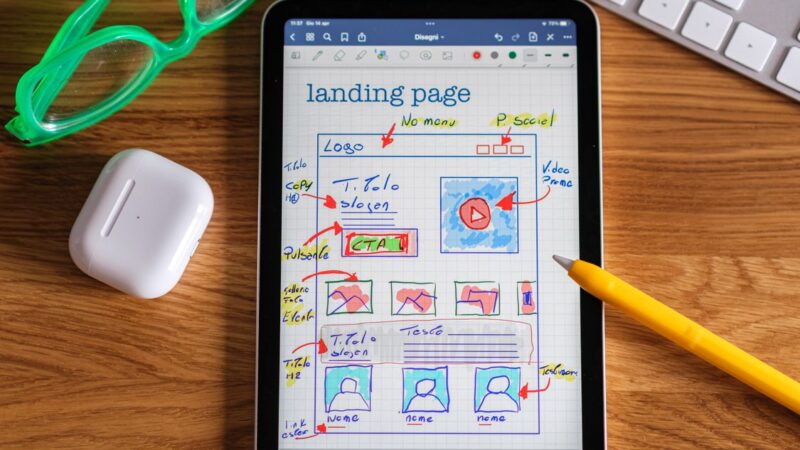
| One-page / landing page | $500 to $3,000 | A single page for one offer, service, or event |
| Small business brochure site (5–10 pages) | $2,500 to $15,000 | Home, about, services, contact, blog setup |
| Larger business site (10–25 pages) | $10,000 to $25,000 | More pages, custom design, more integrations |
| Online store (e-commerce) | $5,000 to $50,000+ | Product pages, checkout, payments, shipping setup |
| Custom web application | $25,000+ | Built-from-scratch tools, logins, dashboards |
An online store costs more because every product needs a page, a price, photos, and a working checkout. A store with 20 products and a store with 2,000 products are very different jobs, which is why e-commerce quotes vary so much.
What Drives the Price Up (or Down)
1. Number of pages
Every extra page needs design, text, and testing. A 5-page site and a 25-page site are not close in price even when they look similar.
2. Custom design vs. a template
A template-based site starts from a ready-made layout and changes the colors, logo, and text. It is faster and cheaper. A custom design is drawn from scratch for your business. It costs more but fits your brand exactly and avoids the “this looks like every other site” problem.
3. Who writes the content
Many owners forget this line item. If you write all the text and supply the photos, you save real money. If the designer has to write it, interview you, and source images, expect the quote to grow.
4. Features and integrations
A contact form is simple. Online booking, a store, a member login, or a connection to your booking or sales software each add hours of work — and hours are what you are paying for.
5. Who builds it
Freelancers have low overhead, so they charge less. Agencies charge more because you get a team: a designer, a developer, a project manager, and often someone handling SEO. That gap is real and fair, as long as you actually need the team. It helps to know what professionals in this field earn: the U.S. Bureau of Labor Statistics puts the median pay for web developers and digital designers at $99,520 a year (May 2025), which is one reason agency rates sit well above a solo freelancer’s hourly rate.
6. Revisions and timeline
Rush jobs cost more. So do endless rounds of changes. A clear brief and quick feedback from your side keep the price — and the timeline — under control.
7. Your location
Designers in big cities tend to charge more than those in smaller towns, and hiring a U.S.-based agency usually costs more than hiring overseas. Price is not the same as quality in either direction, but location does explain part of the spread in quotes.
The Ongoing Costs Nobody Puts in the Headline
The build price is only the first bill. Every website has yearly costs, and these surprise more owners than the build price does:
| Item | Typical yearly cost |
|---|---|
| Domain name | $10 to $50 |
| Hosting | $60 to $300 |
| SSL certificate (often bundled with hosting) | $0 to $100 |
| Maintenance and updates | $500 to $2,000 (or $50 to $500 per month on a plan) |
| Premium plugins or tools | $0 to $500 |
Budget at least a few hundred dollars a year even for a simple site. Skip maintenance entirely and you will eventually pay for it anyway — in a hacked site, a broken contact form, or a rebuild that costs more than the updates would have.
DIY vs. Freelancer vs. Agency: Which Fits You?
Do it yourself
Builders like Wix, Squarespace, and WordPress.com let you launch a decent site for $10 to $139 a month with no big up-front cost. This works well if your budget is tight, your site is simple, and you are comfortable spending a few weekends on it. The real cost is your time — and the risk that the site looks fine to you but weak to a customer comparing you with competitors.
Hire a freelancer
A good freelancer is the sweet spot for most small businesses: custom design without agency overhead, typically $1,500 to $8,000 for a standard site. Ask to see three recent sites they built for businesses like yours, and check those sites on your phone before you decide.
Hire an agency
Choose an agency when the website has to bring in leads or sales, when you need strategy as well as design, or when the build involves a store, bookings, or integrations. Expect $5,000 to $15,000 for a typical small business build, and more for anything complex. You pay more, but you also get backup if one person gets sick or leaves mid-project.
Subscription platforms
Some companies build and maintain your site for a flat monthly fee, often $225 to $500. The appeal is no big bill up front. The catch is that you usually do not own the site — stop paying and the site goes away. That trade-off suits some businesses and traps others, so read the contract before you sign.
Hidden Costs and Red Flags
- You do not own your domain or site files. Always register the domain in your own name and get the site files and logins in writing.
- “Free website” offers that lock you into expensive hosting or monthly fees for years.
- Content not included. A $1,000 quote that assumes you write everything is not the same as a $3,000 quote that includes copywriting.
- No maintenance plan. Ask what happens when something breaks in six months, and what it costs.
- Vague quotes. A one-line quote (“website: $4,000”) tells you nothing. A good quote lists pages, features, revisions, timeline, and what is excluded.
- SEO promises. Nobody can promise you the number one spot on Google. A designer who guarantees rankings is selling something they cannot deliver.
How to Compare Quotes Fairly
Get three quotes, but do not just pick the cheapest. Send every designer the same brief: how many pages, what features, who writes the text, and your deadline. Then compare:
- What exactly is included — and what is not?
- How many rounds of revisions are included?
- Who owns the domain, the site, and the content?
- What does the first year of hosting and maintenance cost in total?
- Can you see three live sites they built, and do those sites load fast on a phone?
- What happens if you want to move to another designer later?
Judge a quote by its three-year total cost, not by the first invoice. A $1,500 site with $400 a month in fees costs more over three years than a $6,000 site with $100 a year in hosting.
How to Save Money Without Getting a Bad Website
- Cut pages, not quality. Launch with the five pages you need and add the rest later.
- Write your own first draft of the page text, even a rough one. It cuts copywriting time a lot.
- Use your own photos where they are good — real photos of your team and work beat stock photos.
- Start with a template, customized well. A good designer can make a template look custom for far less than a from-scratch build.
- Skip features you do not need yet. A booking system can wait until customers actually ask for it.
- Do it in phases. Launch a solid small site now, then add the store or member area when the business can pay for it from revenue.
Frequently Asked Questions
Is $1,000 enough for a good website?
It can be, for a basic brochure site with a few pages, a template, and content you supply yourself. Surveys of design firms show many standard projects quoted between $1,000 and $1,500. What $1,000 does not buy is a large custom site with strategy, copywriting, and advanced features — if a quote promises all of that for $1,000, something is missing.
How much does a website cost per month?
A DIY builder runs about $10 to $139 a month. A professionally built site usually costs $50 to $500 a month in hosting, maintenance, and updates after the build. Subscription platforms bundle everything for $225 to $500 a month but often mean you never own the site.
Why do website quotes vary so much?
Because quotes bundle different things. One quote may include copywriting, SEO setup, and a year of maintenance; another may be design-only. Page count, custom work, features, and who builds it all move the number. Compare what is included, not just the bottom line.
Does a cheap website hurt my Google rankings?
Not by itself. Google ranks pages on content, speed, mobile experience, and usefulness — not on what you paid. But very cheap builds often skip the basics: slow loading, no mobile layout, missing page titles, and thin content. Those problems do hurt rankings, whatever the price tag.
How long does it take to build a small business website?
A DIY site can be live in a few days. A freelancer usually needs 2 to 6 weeks. An agency build takes 1 to 3 months. The most common cause of delay is not the designer — it is waiting on text, photos, and feedback from the owner.
Can an AI website builder do it for free?
AI builders can put together a working starter site in under an hour, and they are a real option for a very simple site on a tight budget. But the output still needs human work: your branding, accurate text about your business, and basic SEO. Expect to spend a few hours polishing it, or pay a freelancer for a short review pass. For a site that has to win customers, AI output alone usually looks generic.
Should I pay for ongoing maintenance?
Yes, in most cases. Software updates, backups, and security checks keep the site working and safe. A small care plan at $50 to $100 a month is cheaper than fixing a hacked or broken site later.
The Bottom Line
Most small businesses should budget $1,500 to $8,000 for a freelancer-built site or $5,000 to $15,000 for an agency build, plus a few hundred dollars a year to keep it running. Spend less only when the site is simple and you are willing to do part of the work yourself. Spend more when the website has to win customers, take orders, or carry the business. Either way, the cheapest quote is rarely the cheapest website — count the three-year cost, check what is included, and make sure you own what you pay for.
Prices in this guide are 2026 U.S. planning ranges drawn from agency surveys, freelancer platforms, and official labor data. Your quotes will vary by region and scope, so confirm current numbers with any vendor before you budget.