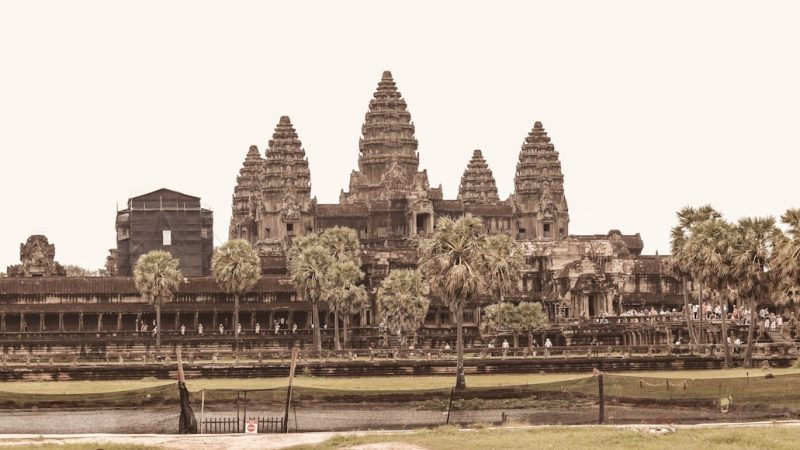
Top 10 Architectural Wonders of India: A Journey Through Heritage and Innovation
India is home to many architectural marvels like the Sun Temple, Hawa Mahal, Lotus Temple, and more. Learn about the top 10 of these marvels by going through our post.
India has a rich architectural legacy that spans centuries. You can indulge your spiritual side at the Meenakshi Amman temple, and feel like a Rajput queen at the Hawa Mahal. Alternatively, you can time-travel to the Mughal Era through the Taj Mahal or see Old Calcutta through the Victoria Memorial. The choice is yours. As a first-time traveler, it can be hard to determine which place you would like to visit first.
That’s why you can refer to the list of 10 architectural marvels below and make up your mind accordingly. However, irrespective of which location you choose, you should not forget to fill out your India visa application form online.
You should do it at least a week prior to your visit. In case you’re doing it at short notice, you should fill it at least 48 hours prior to your trip.
Which Are The Top 10 Architectural Wonders of India That You Should Not Miss?
You should not miss visiting the Taj Mahal, Sun Temple, Hawa Mahal, Lotus Temple, Brihadeshwara Temple, and the Gateway of India. Some other marvels you should not miss visiting are the Meenakshi Amman Temple, the Charminar, and the Victoria Memorial.
1. Taj Mahal
Hailed as a symbol of timeless love by many people, the Taj Mahal was built by Shah Jahan. He was the son of Jahangir and the father of Aurangzeb. The Mughal Emperor built it as a mausoleum for his favorite wife, Mumtaz Mahal.
It reportedly took 22 years for the entire structure to be built, with construction ending in 1654. The building is surrounded by four minarets, a garden, a mosque, and a rest house.
Its most striking feature is the material with which it was built, white marble inlaid with calligraphy. This material makes it glow differently depending on the time of day. This site was also designated as a UNESCO World Heritage Site in 1983.
Don’t forget to take a photograph on the bench, against the panoramic backdrop of the monument during your visit.
The best time to visit this monument is between October and March, due to the pleasant weather. So you should fill out your India visa application form online accordingly.
2. Sun Temple
Odisha is home to many temples and is often known as the land of temples and monuments.
One of these temples is the Sun Temple located in Konark, 35 km away from Puri. It was built by King Narasimha Deva I, of the Eastern Ganga Dynasty.
This temple is renowned for its intricate architecture, featuring 108 pillars, mandap-like structures, and the main mandir. You cannot enter the temple, however. That’s because the Britishers sealed the entrance with sand to prevent the structure from collapsing on itself.
One of the most striking things about this temple is that you can tell the time from its stone wheels.
There are about 24 such wheels since the temple was constructed in the form of Surya Dev’s chariot.
Interestingly, her grotto is located in the region of Konark, which always remains in the shadows.
Apart from that, you can also see carvings on its walls which carry detailed scenes from ancient Hindu mythology. You should visit between November and February, when the temperature remains pleasant.
3. Hawa Mahal
The Hawa Mahal is one of Jaipur’s easily recognizable palaces. It can be distinguished by its pink sandstone and 953 honeycomb window structures. The palace was built by Maharaja Sawai Pratap in 1799 and designed by Ustad Lal Chand.
It has influences from both the Rajput and Islamic styles of architecture.
The honeycomb window structures help keep the palace cool, even in summer. These windows were used by the Maharaja’s queens to observe the populace without being seen. This was due to the custom of purdah, which forbade women from freely mingling with the public.
One of the unique things about this palace is that despite its five-story height, it has no foundation. It also leans at an 87-degree angle. During your visit, you might take some time to locate the entrance, like others before you.
Ultimately, you will have to use the ramps to enter the palace. You should visit between October to March, since the weather remains pleasant during this period. Do remember to fill out your India visa application form online and apply for a visa in time.
4. Lotus Temple
The Lotus temple in Delhi was built by an Iranian-Canadian architect, Fariboz Sehna. This temple is a Baháʼí House of Worship and is open to people from all religions. The lotus flowers at the top of the temple signify purity.
This temple was opened to the public in December 1986.
During your visit, you will find nine lakes around the temple, which make the temple feel like it’s a lotus floating on water. These lakes are complemented by the nine lotus petals, which stand for the spiritual paths of the Baháʼí faith.
The nine spiritual paths culminate in the unity and oneness of humans. Don’t forget to cover your head during your visit. Apart from that, since it’s located in India’s capital, you should ensure that you meet all the evisa India requirements.
These include an updated photograph, contact information, and a valid passport. This will ensure a hassle-free entry process.
5. Brihadeeswara Temple
The Brihadeshwara temple was built during the 11th century in 1010 AD, by the legendary Rajaraja Chola I. This temple is locally known as Peruvudiayar Koil, and is dedicated to the Mahadev, Lord Shiva.
During your visit there, you will be awestruck by the statue of Lord Shiva’s divine vehicle, Lord Nandi. His statue is 13 feet high and 16 feet wide and was built from a single rock. You will also be amazed by the 216-foot-high temple tower.
The temple is considered one of the Great living Chola temples, along with the Airavatesvara and Gangaikondacholeeswaram Temple. It stands as a striking example of Dravidian architecture.
6. Gateway of India
The Gateway of India was constructed in 1911 to commemorate the arrival of Queen Mary and George V. Its architecture is a blend of Indian and Saracenic principles. The gate is about 26 meters or 85 feet high, and its walls feature Hindu and Islamic motifs.
Its final design was inspired by Scot George Wittet. The Gateway’s blend of Hindu and Islamic architectural styles helped influence Mumbai’s skyline.
The structure of the monument was built using yellow basalt stones, which were applied on a reinforced concrete framework. You will also find jali or latticework done on the structure.
7. Mysore Palace
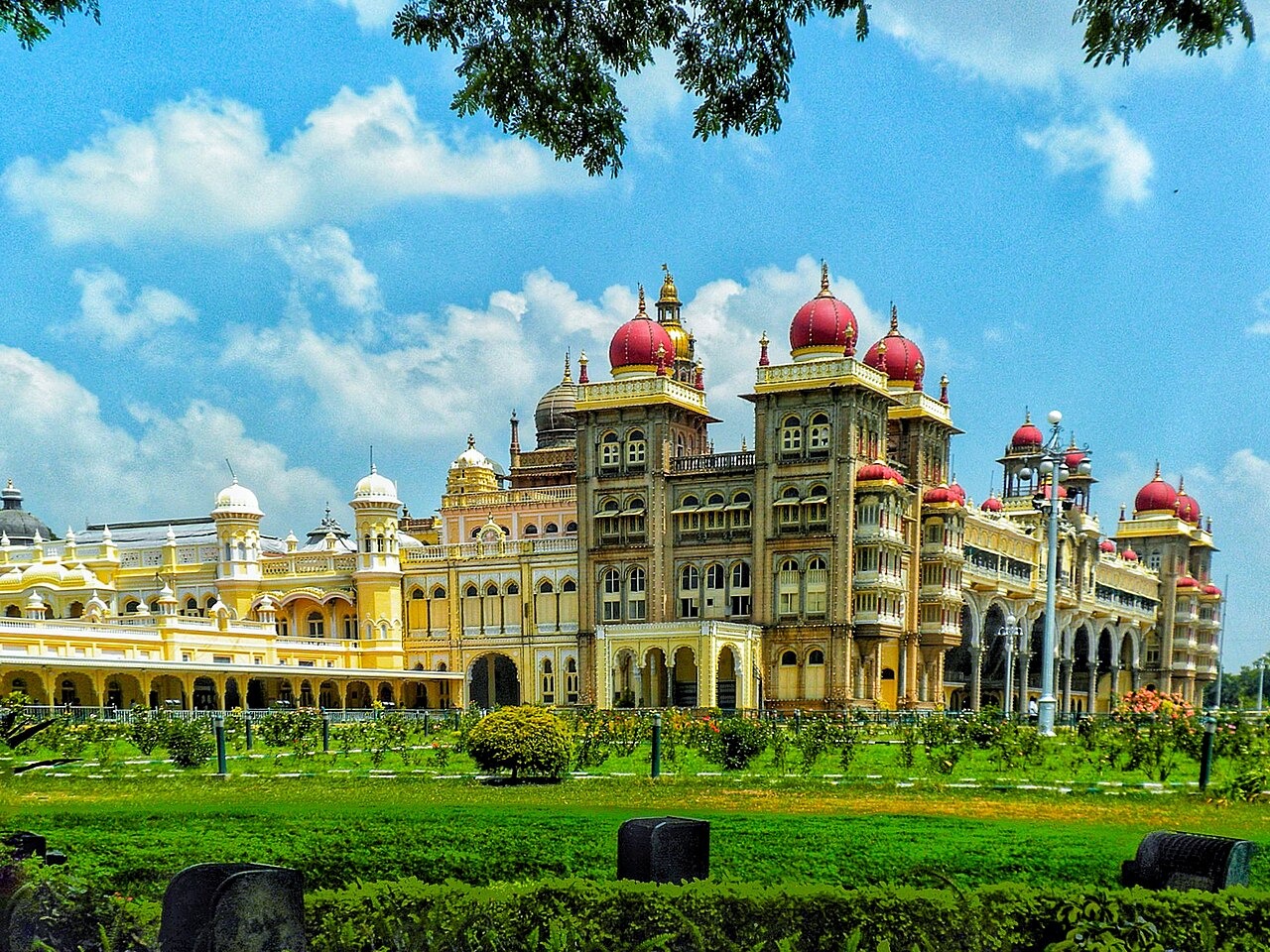
The Mysore Palace or Mysuru Palace was built between 1879-1912. You will be awestruck by the blend of Indian and Saracenic architectural elements.
Some of the other places within the Palace that you should visit are the Durbar Hall, and marriage pavilion, or Kalyanamantapa. The Durbar Hall has elegantly sculpted pillars, while the marriage pavilion’s stained glass and glazed tiles will surely impress you.
You should also not miss out on the golden elephant howdah or seat, the paintings, and the golden throne. However, you will only get to see the jewel-encrusted throne when you visit during Dusshera.
Apart from that, you will also get to see the sight of the Palace lit up in golden lights.
The time for Dusshera varies every year, so make sure to check the Indian calendars. That’s because you will have to fill out your India visa application form accordingly.
8. Meenakshi Amman Temple
This temple is a famous temple complex located in Madurai. It has a big square area of 65000 square metres. During your visit, you will first be impressed by its entrance.
It has 1500 sculptures. The temple complex is a mixture of various types of spaces. These include big halls, high ceilings, and a combination of darkness and light.
The origins of this temple are divine, as it is believed to have been built by Lord Indra. He created a shrine over a Shiva Lingam, to which other divine beings also came for worship.
Soon, this was noticed by a local, and the king, Kulashekhara Pandya, built the first temple of this complex. Meenakshi is worshipped as a Goddess here, since she fell in love with Lord Shiva.
9. Charminar
The Charminar is one of Hyderabad’s landmarks, and was built by Sultan Quli Qutb Shah. There are differing reasons as to why this structure was built. Some people say that he built it to honour his wife, Bagmati.
Other reasons say that he built to thank Allah for saving the region from a plague. Some other accounts say that it was built to honour the Prophet’s son-in-law, who passed away in Karbala.
This structure was built in 1589 and has an impressive blend of Persian and Indian architectural elements. It was designed by an Iranian architect, Mir Momin Astrawadi.
He designed it in the shape of a square outlined monument surrounded by four pillars, which represent the four Islamic caliphs. Another thing you will notice during your visit is the motifs of the Qutub Shahi architecture.
You should cover your head and wear full-sleeved clothes that don’t expose your shoulders or knees when visiting the Charminar. You can visit this landmark between November and February for a pleasant experience.
10. Victoria Memorial
The Victoria Memorial was built between 1906 and 1921 in Queen Victoria’s memory. It is a striking example of Italian Renaissance architecture and is built with pure marble. The iconic monument is perhaps the second most well-known in Kolkata after the Howrah Bridge.
It houses many artefacts from different historical periods, such as Queen Victoria’s piano, Netaji’s belongings. You will also find a uniform of the Rani Jhansi Regiment, and paintings of Queen Victoria and Prince Albert.
The vision for this monument was Lord Curzon, who was the Viceroy of India between 1899 and 1905. After you tour the various artifacts inside, you can enjoy the fresh air in the gardens surrounding the property.
The best time to visit this palace is between February and March, since the temperature mostly remains pleasant. Alternatively, you can choose to visit during Durga Puja, to also soak in the festivities.
This festival also recently gained the UNESCO World Heritage tag.
Wrapping Up
If you’re a first-time visitor, these are ten of the places that you should not miss during your visit. Each of these places will offer something new in terms of experience and knowledge, and you will feel refreshed.
You should also remember to pack your medication, the right clothes and some basic snacks. These can include biscuits, fruits and so on throughout your travels.
Ready To Fly To India?
Do print your visa and keep a duplicate with you when you travel to India. You should also carry a valid passport when you book your visa from a reputable platform.
In case you face any issues, get in touch with the helpdesk.